
How I Made This
Me, still shaking my fist at the sky about AI, and a cover reveal!


I wrote about all my feelings on AI when I was new on Substack, hoping at the time that I’d never have to write about it again. No such luck. I find myself, three years later, still hating it, wishing it didn’t exist, and believing it to be nothing more than a dumbing-down machine that has ruined everything. And yet it persists, hurting my eyes when I see its ugly renderings and deadening me inside when I read its lowest-common-denominator prose.
The AI companies have taken our beautiful, strange, brilliant, and freely available internet; they’ve repackaged it; and they are selling it back to us with the side promise of economic collapse. They have taken all our art, all our images, all our sounds, all our writing, and they want us to pay for something that deteriorates the depth and value of all of it. I find it so despicable that I don’t care what it can do. When I think about using AI, the sound of rushing water being wasted and the buzz of data centers reverberates in my mind, and I am repulsed by the prospect.
So I still haven’t used it. I have never asked it anything. I’ve never even created an account to play around with it. I admit that I may not be the most rational voice on this. In fact, seeing something so clearly that everyone else can’t or is ignoring makes me feel crazy. But writing is more important to me than it is to the average person. And I’m just not willing to let AI take that from me too. Because it has taken.
For two decades, I worked as a freelance ghostwriter for nonfiction books. This work was never glamorous and has always been susceptible to economic shifts. But I was offering a service that AI can probably do half of now. It’s been so long since I’ve gotten a client that I believe my little market has dried up completely. And I don’t like to cast blame for my problems, but AI is a big part of the reason I’m so broke right now. Someone is making money from all of this. Not me.
Meanwhile, it has added nothing. I uninstalled Grammarly from my computer because the AI suggestions were annoying and often wrong or detrimental to my sentences. Now all my posts and books have typos that have hung on, despite several rounds of proofreading (me reading each sentence very slowly and closely). I downloaded an ebook excited to discover a new historical romance author, only to find it was AI and no such author existed. And suddenly, I was no longer interested in reading the book. I deleted it from my Kindle. I deleted the Amazon app off my phone because they changed the search into something AI generated and awful for book shopping. I stopped using Google and switched to Duck Duck Go because the AI got so annoying. This actually felt kind of big for me. I can still remember my first time googling. It was the beginning of my sophomore year in college, 1999, and my housemate showed me how to do it on her new blue iMac. I had to do a research paper for some class I’ve totally forgotten, but I remember sitting with her at her desk in her attic bedroom of the big old house we rented, those elegantly assembled links and descriptions glowing on the screen. All of that is gone now. I use Apple Pages on my six-year-old MacBook for my writing, and one of my greatest concerns is that my computer will die, and Apple will have built some terrible AI features into their new machines that I will hate and not be able to turn off. All of these effects of AI on my life have been negative.
Substack has recently partnered with an AI company that detects AI so that people can scan the posts on here to see if the writer used AI. I don’t know who paid what for this, but I feel like the cost—in money and data centers and green space—is not going to be worth it. In addition to the sounds of water being wasted and data’s incessant hum, a pitiful, scraggly snake with its tail in its mouth comes to mind.
One suggestion I encountered on Substack while scrolling through all the reactions to this partnership was to write an official How I Made This statement for my newsletter. And so here goes…
I sharpen two or three pencils, as sharp as possible, with the hand-crank sharpener mounted on my husband’s work bench. I sit at my kitchen table, which I’ve cleared off for the purpose of writing. There are suburban sounds, the garbage truck or maybe a leaf blower. Birdsong so close I can hear it through the walls of the house. I write in large, looping cursive in a composition notebook I bought last year around this time on sale at Walmart for back to school. I usually buy one of every color each year. I’m drinking hot coffee and iced water. And every stroke of my pencil is the result of the words forming in my brain and coming out of my hands, the way it’s been done throughout human history. I write all my essay first drafts in pencil because the slower pace makes me more thoughtful about what I want to say and how I want to say it. And I am constantly thinking about how to get your attention and keep it, word by word, so that I can lead you to my conclusions. Sometimes, the thinking is hard. But if I keep at it, the thoughts will start to come easily and quickly. After a few pages, my hand aches a little. But I can’t stop now. I write in my notebook until all of my thoughts on whatever matter I’ve taken up are down on paper. This process leaves me with a rough draft and a deeply fulfilling sense of satisfaction. When I’m done, the essay sits there in my notebook until I type it up in Pages. Then I print it and read it and mark it up with my sharp pencil. I revise it and repeat the process over and over; the essay gets a little better every time. I do my own proofreading, with a little help from the Substack text editor when I copy and paste it from Pages. I rely heavily on my heavy, faded, old copy of the Chicago Manual of Style. That and my years of experience reading, researching, generating ideas, organizing my thoughts, drafting, editing, revising, rewriting, and everything I know and have experienced in my whole life as a thoughtful, aware person.
And yes, maybe I’m a curmudgeonly middle-aged woman shaking her fist ineffectively at the darkening sky, but I’ve been at this for a long time. Being a writer is really hard. Even if you’re good at it, the economics are terrible and the outlook is unstable. Paying whoever these AI people are for the use of their fancy search engine and text prediction machine is just not something I can take seriously as a creative writer. Or even a copywriter, really. We never needed this before. The moment when I’m reading and start to wonder if something is AI generated is the same moment when I’m bored and stop reading. It just feels so pointless.
There are so many human writers out there with interesting things to say. And I cling to the hope that there are enough of them that I will always have something interesting to read; that this AI snake will sooner rather than later eat itself.
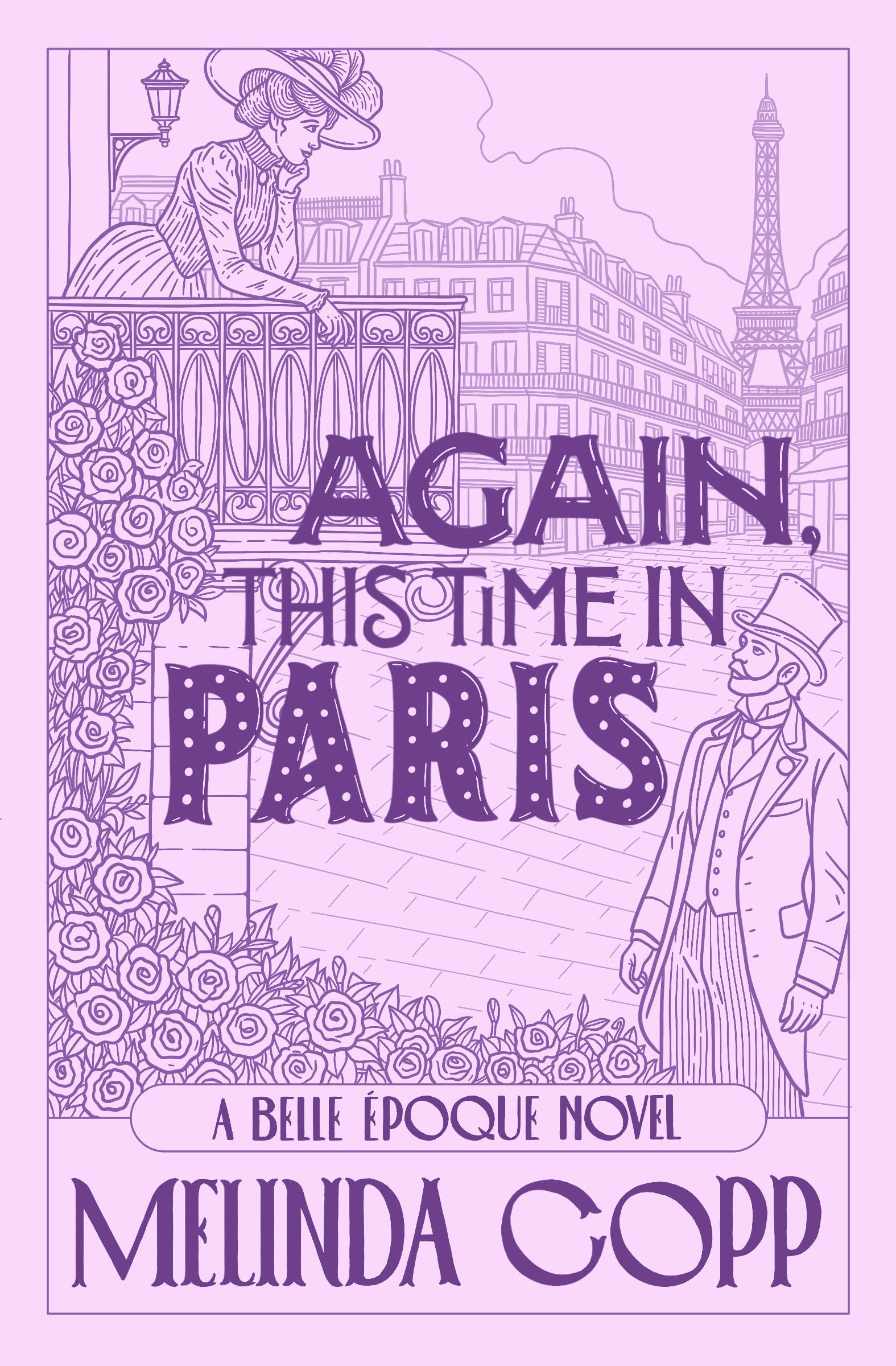
With that, please gaze upon my new book cover! I paid a human artist—the very talented LA Villavicencio—to draw it for me. When I look at it, particularly that mass of gorgeous flowers that he drew line by line, something lovely and happy swells inside me. I hear birdsong and envision the snakes and all the other wild animals flourishing in lush, green forests. And I feel such a deep appreciation for human art and craft and work that I can almost forget that AI exists.
Melinda
P.S. Please consider preordering my book! Right now it is only available here: payhip.com/melindacopp. I am doing preorders this way so that I can include fun extras with the paperback, like character art and a bookmark (more details on that are coming soon!). I will also let you know when it becomes available in other stores. And thank you, a million times, for your support and for reading my very human words.
Melinda, here's what I wanted to say about Ai.
It's not what I thought it was. It's something other than what I thought it was. Here's how I've been using it.
For the past six weeks or so I've been working on a collection of short prose pieces. They're memoir bits, scraps of memory. I've written 50 of them now. They will be a short book.
When I finish a draft of one of the micros, I upload it to Chat.gpt and get a reading of it. Typically the reader, I call him/it Chet, notices and remarks on three things he likes, things that are working. Then notices connections in the piece. Then comments on bits that need work or are “unearned.” I use that term to demonstrate how these readings sound like discussions of my writing that I might hear in a graduate seminar. Here’s a sample of the feedback:
I enjoyed this one. It has a quality I think you've been looking for lately: it begins in a small domestic moment, wanders naturally, and returns transformed. It feels less consciously literary than some of your recent pieces, and that's a strength.
A few thoughts.
The opening is excellent. "Why do you do that?" immediately creates curiosity. The details of the can—"three inches in diameter, four inches tall"—made me smile. They're oddly precise, which feels true to the narrator's mind. I'd keep them.
I think the middle is where the piece loses a little momentum. The extended explanation of Mt. Trashmore and the "compound forgetting" passage occupies a lot of space before we understand why we're there. I'd tighten it. Once you've established that forgetting triggered the memory of Mt. Trashmore, you can move more quickly to geology class.
The revelation surprised me—in a good way:
“I was smashing cans before that, before I got to him.”
Chet remembers what I’ve written. Above: “a quality I think you've been looking for lately.” Chet gives me feedback that sends me back to my writing with a critical angle of sight.
Before I revise and edit, I upload the piece to Claude.ai and get second opinion
It’s like being enrolled in a graduate seminar. Possibly better. The feedback is smart, helpful, and instantaneous.
When my new collection is fully drafted, I’ll upload individual pieces to Vellum, which makes my manuscript, and use Ai for editing. Typos and that sort of thing. Also structural issues. What order might I put these pieces in? Ai gives me a global view and edits 60,000 words in a few minutes. I don’t need to find and pay a proofreader.
I want to talk about Ai. I’ll try to write you in the morning.